Short answer: if you can offer only one thing, make it black-oil sunflower — thin-shelled, high-oil, and a seed cardinals readily eat. Add safflower alongside it and you get a seed Cornell Lab calls “a favorite among cardinals” and says some sources report House Sparrows, starlings and squirrels don’t like. Dedicated cardinal blends are generally built around sunflower and safflower, sometimes with additional seeds or flavoring, though many of the labels and listings we checked don’t state the exact ratio; hulled “no-mess” mixes eliminate shell waste, though Cornell Lab calls shelled sunflower “expensive.” Everything below is compared on manufacturer ingredient lists and current Amazon listings — we haven’t tested any of it ourselves, and where a listing didn’t give us real ingredient detail, we say so rather than guess.
What the science actually says cardinals eat
Northern cardinals are heavy-bodied, thick-billed seed-crackers, and black-oil sunflower and safflower are both well-suited seeds for attracting them. Black-oil sunflower attracts many seed-eating birds, including cardinals: thin shell, high oil content, easy to crack. Safflower is the more interesting one — Cornell Lab’s own seed guide calls it “a favorite among cardinals”, and notes that its thick shell is hard for some birds to crack open. The same Cornell guide adds an honest caveat we carry over from our how-to-attract-cardinals guide: Squirrels are often said to dislike safflower, but some squirrel populations have developed a taste for it anyway. Treat safflower as a seed that tilts the odds toward cardinals, not a guarantee that nothing else shows up.
Feeder shape also matters. Cardinals are broad and tail-heavy, and Cornell Lab notes that cardinals and grosbeaks tend to prefer tray and hopper feeders. In our read of feeder designs, narrow-perch tubes are the weakest fit unless the tube has a long, sturdy perch or an added tray. They also forage on the ground beneath feeders as a matter of course — National Audubon Society guidance treats this as normal cardinal behavior, not a sign anything’s wrong, though it does mean ground hygiene matters (more on that below).
At a glance
| Pick | Core ingredients | Cardinal targeting | Guaranteed analysis | Bag size | Band | Best for |
|---|---|---|---|---|---|---|
| Lyric Cardinal Wild Bird Seed | Black-oil sunflower, safflower, striped sunflower, buckwheat, sunflower kernels — >70% sunflower | Explicit (named for Cardinals, Grosbeaks & Blue Jays) | Yes — 17% min protein, 40% min fat | 18 lb | $25–75 | One of the best-documented mixes in this comparison |
| Audubon Park Cardinal Blend | Black-oil sunflower, safflower (two-seed, no stated ratio) | Explicit | Not disclosed | 4 lb | <$25 | Small households, simple two-seed mix |
| Kaytee Wild Bird Cardinal Blend | Oil sunflower, safflower, artificial cherry flavor | Explicit | Not disclosed | 7 lb | <$25 | Squirrel-deterrent framing, multi-species |
| Wagner’s 76027 Black Oil Sunflower | 100% black-oil sunflower seed | Implicit (multi-species) | Not disclosed | 25 lb | Band not confirmed: check the listing | Bulk single-seed default |
| Wagner’s Sunflower + Safflower Bundle | 100% sunflower (25 lb) + 100% safflower (5 lb), separate bags | Implicit, DIY ratio | Not disclosed | 25 lb + 5 lb | Band not confirmed: check the listing | Tuning your own sunflower-to-safflower ratio |
| Cole’s SF20 Special Feeder | Sunflower (3 forms), raw peanuts, safflower, pecans | Implicit (multi-species “gourmet”) | Not disclosed for SF20 | 20 lb | $25–75 | Jays and woodpeckers alongside cardinals |
| Kaytee Ultra No Mess Nut & Fruit Blend | Hulled sunflower, peanuts, pistachios, dried fruit, fortified extras | Implicit (named species list incl. cardinals) | Yes — 17% min protein, 38% min fat | 5.5 lb | <$25 | Zero hull mess, covered feeders only |
| Lyric Fine Tunes No Waste | Peanut, sunflower kernel, almond, pistachio, hulled millet, pecan, pumpkin seed pieces | Implicit (marketed to smaller-beaked birds) | Not disclosed | 5 lb | <$25 | Mixed-species patio feeding, cardinals included |
Specs are manufacturer-stated and gathered from brand sites and current Amazon listings — not independently bench-tested. Where a brand didn’t disclose a figure, the table says so instead of guessing. Price bands, never prices. Bands reflect observed selling prices at our last review. Offers change; check the listing.
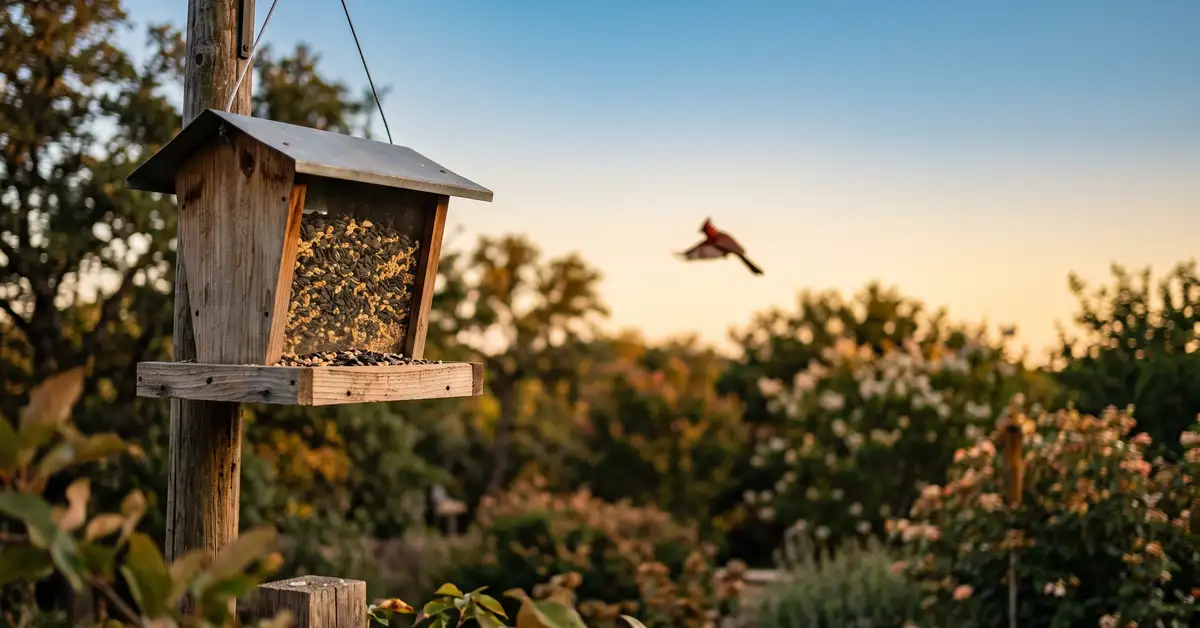
The eight picks below split into five categories: dedicated cardinal blends that combine sunflower and safflower for you, straight sunflower for readers who want one simple bulk seed, a DIY bundle for tuning your own ratio, a premium multi-species mix for readers who don’t mind sharing with jays and woodpeckers, and hulled “no-mess” mixes that leave the shells out of the bag entirely. Read the trade-off under each one before you buy — and see our full Seed & Suet guides for the rest of the recurring-consumables layer.
Transparency first: This guide contains affiliate links. If we’re enrolled in an affiliate program, we may earn a commission at no extra cost to you — it never affects how we research or rank. Read our full affiliate disclosure policy.
Lyric Cardinal Wild Bird Seed – Sunflower & Safflower Premium Mix (18 lb)
Choose this if: you want one of the best-documented cardinal mixes in this comparison and don’t mind buying in bulk.
Lyric’s label states the mix is over 70% sunflower — black-oil sunflower, safflower, black striped sunflower, buckwheat and sunflower kernels — and backs it with an actual guaranteed analysis: 17% minimum crude protein, 40% minimum crude fat, 20% maximum crude fiber, 12% maximum moisture. That’s more disclosure than most picks in this comparison. The honest trade-off: the mix also contains buckwheat, in a proportion Lyric’s label doesn’t state, and it’s sold in an 18-lb bag, so it’s a bigger up-front buy than the smaller cardinal blends below.
Audubon Park Cardinal Blend Wild Bird Food (4 lb)
Choose this if: you want a simple two-seed cardinal blend in a small bag for a single household feeder.
The ingredient list is just black-oil sunflower and safflower — no fillers named, which is itself a specification point worth noting even without a stated ratio. Audubon Park’s own product page recommends hopper or platform feeders, which lines up with cardinal biology. The trade-off: Audubon Park’s product page doesn’t list a guaranteed analysis, and without one, we can’t compare its energy density numerically against blends like Lyric’s that do disclose one.
Kaytee Wild Bird Cardinal Blend Food Seed (7 lb)
Choose this if: squirrel deterrence is as much the point as cardinal attraction.
Kaytee leans hard on safflower’s bitter taste as a squirrel discourager, and the ingredient list — oil sunflower, safflower, artificial cherry flavor — backs a sunflower-and-safflower-only formula with one added flavoring. Kaytee’s Amazon listing doesn’t show a guaranteed analysis, and the artificial cherry flavor is worth flagging plainly: we found no source showing cardinals prefer it over an unflavored mix; it’s simply an added ingredient. Marketed toward cardinals, chickadees, nuthatches and grosbeaks, so expect a multi-species crowd.
Wagner’s 76027 Black Oil Sunflower Wild Bird Food (25 lb)
Choose this if: you want the simplest, lowest-effort route to attracting cardinals and want to add safflower yourself later if you choose.
This is 100% black-oil sunflower seed, nothing else. Sunflower is the seed Cornell Lab says attracts the widest variety of birds, and Cornell describes black-oil seeds as thin-shelled and “easy for virtually all seed-eating birds to crack open.” It’s our single-seed pick if you can only offer one. The 25-lb bag is a bulk buy suited to high-traffic feeders or multiple stations. The honest trade-off: there’s no safflower in this bag — the seed Cornell Lab says some sources report squirrels, House Sparrows and starlings don’t like — so you get none of that possible deterrent.
Wagner’s Black Oil Sunflower and Safflower Wild Bird Food Bundle (25 lb + 5 lb)
Choose this if: you want to set your own sunflower-to-safflower ratio instead of buying a pre-mixed blend.
This isn’t a pre-mix — it’s a 25-lb bag of 100% black-oil sunflower and a separate 5-lb bag of 100% safflower, both filler-free, so you control the blend yourself. How much safflower you mix in is up to you; Cornell Lab notes only that some sources report squirrels, House Sparrows and starlings don’t like it, and that in some areas they seem to have developed a taste for it, so local results vary. The trade-off is that you’re doing the mixing, not the manufacturer, and by our own math on the two bag sizes (25 lb sunflower to 5 lb safflower, a 5:1 weight ratio), the safflower bag runs out well before the sunflower does if you use them together at anything close to even proportions.
Cole’s SF20 Special Feeder Bird Seed (20 lb)
Choose this if: you want a premium multi-species mix where cardinals are one beneficiary among several “gourmet” visitors.
Ingredients are black-oil sunflower, sunflower meats, black striped sunflower, raw peanuts, safflower and pecans — a nut-and-sunflower-heavy formula with no low-value filler seeds. Cole’s publishes a guaranteed analysis for some of its other product lines, but not one we could confirm applies specifically to SF20, so we’re not quoting numbers for this one. The peanuts and pecans may also attract jays, woodpeckers and squirrels, so this is a multi-species mix that includes cardinals rather than a cardinal-exclusive pick.
Kaytee Ultra No Mess Nut & Fruit Blend (5.5 lb)
Choose this if: hull mess under the feeder is the problem you’re actually trying to solve.
Every ingredient here is pre-hulled or shell-free — hulled sunflower, peanuts, pistachios, dried cranberries and cherries, plus a longer list of fortifying ingredients — and Kaytee publishes a 17% minimum crude protein and 38% minimum crude fat guarantee. Kaytee names woodpeckers, cardinals and grosbeaks among the birds it’s meant to attract. The trade-off, straight from the manufacturer: because nothing has a protective shell, this mix spoils faster than in-shell seed if it gets wet, so it needs a covered feeder and more frequent inspection, not just a refill-and-forget routine.
Lyric Fine Tunes No Waste Wild Bird Seed (5 lb)
Choose this if: you’re feeding a mixed patio crowd — finches, chickadees, bluebirds — and want cardinals to be able to join in too.
This one isn’t marketed specifically for cardinals — Lyric pitches it at smaller-beaked birds — but the finely cut blend of peanut, sunflower kernel, almond, pistachio, hulled millet, pecan and pumpkin seed pieces includes hulled sunflower, pumpkin seed and nut pieces that cardinals can eat. No fillers, no shells, and the Amazon listing doesn’t show a guaranteed analysis. Same moisture caveat as any hulled mix: keep it in a feeder that protects it from rain and snow, since pre-hulled pieces spoil faster than in-shell seed.
What we left out, and why
| Product | Why it’s not here |
|---|---|
| PRDseed “Cardinal Bird Seed – Cardinal Crunch” (10 lb) | Marketed by name as a cardinal blend, but we could not verify its actual seed composition against a source we could stand behind for this guide, so we’re not publishing a ratio for it. If you can confirm the current ingredient breakdown yourself against the manufacturer’s own listing, it may be worth a look. |
| Blue Seal Premium Cardinal Mix | The Amazon listing this guide previously linked now resolves to a 20 lb bag titled “Shell-Free Mix”, which doesn’t match the 6 lb bag this guide previously listed. We couldn’t confirm the current product from its listing, so we’ve left it out. |
Hulled vs in-shell: what you’re actually paying for
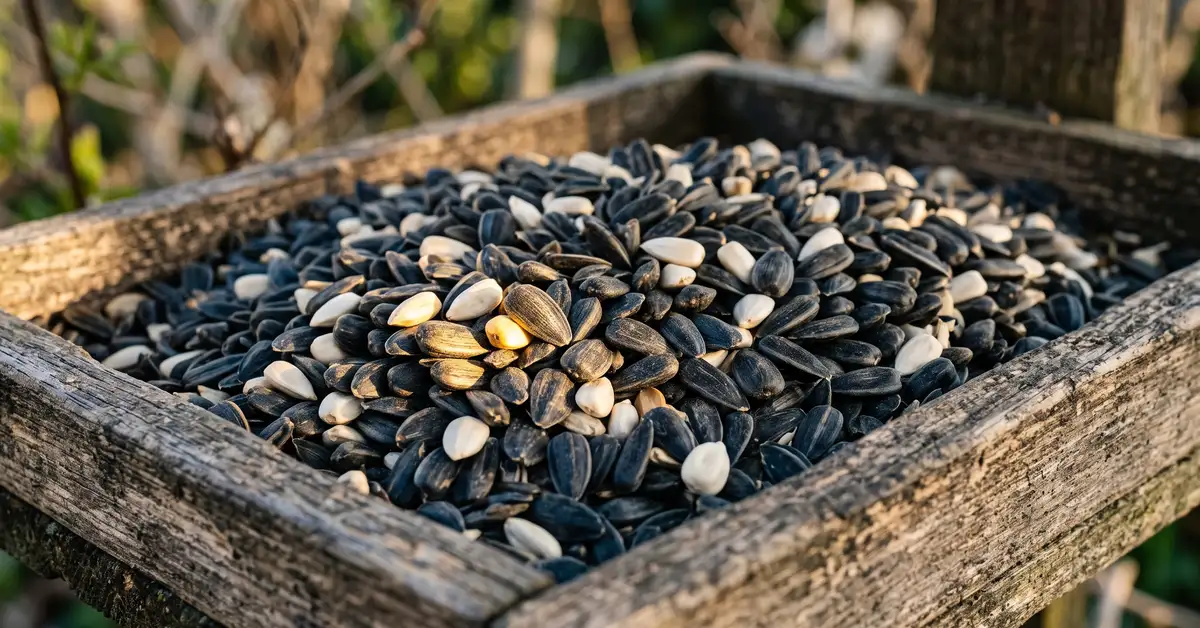
Lyric says it plainly on its own site: when you buy whole seeds, “you are also paying for the shell”. Every in-shell sunflower bag includes hull weight a cardinal cracks off and drops on the ground; a hulled mix leaves the shells out, though it may also contain nut pieces, dried fruit or other shell-free ingredients. Packaged weight includes discarded shells in an in-shell product, so it is not the same as edible weight. We haven’t verified a hull-to-kernel percentage for any of these bags, so we won’t invent one or turn the price bands into a per-ounce figure. On the other side of the ledger, Cornell Lab’s seed guide calls shelled sunflower “expensive” and warns that, without the shell, sunflower hearts and chips spoil quickly. Neither is “wrong”: in-shell seed suits a yard that doesn’t mind hulls on the ground, and hulled mixes suit a patio or deck where shell litter is the problem.
Storage, hygiene and the recall question
High-oil seeds like sunflower and safflower go rancid if they sit in heat, light or damp for too long, and hulled kernels in no-mess mixes are even more exposed since they have no shell protecting them. Store bulk bags in a cool, dry spot, ideally transferred into a sealed metal or heavy-plastic bin once opened, and buy hulled mixes in quantities you’ll actually use before hot, humid weather sets in.
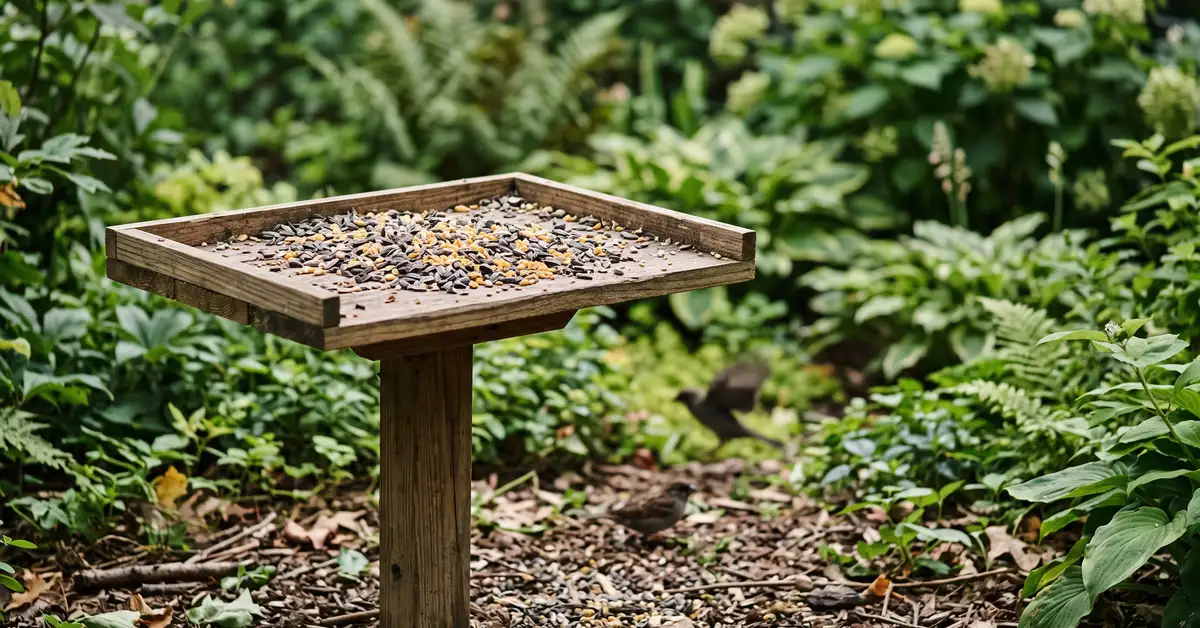
Feeder hygiene also matters, especially since cardinals forage on the ground beneath feeders as a matter of course. Clean feeders on a schedule — at least every two weeks under normal use, and more often during wet weather or heavy use — and rake up spilled hulls and old seed from the ground periodically so it doesn’t become a breeding ground for mold or bacteria. If you ever see a visibly sick bird at a feeder, Cornell Lab’s Project FeederWatch recommends removing the feeders that bird is using for a couple of weeks and cleaning them and the feeder area thoroughly while they’re down; we’re not veterinarians and we’re not claiming otherwise.
On recalls specifically: when we compiled this guide, the brand and Amazon listing pages we reviewed showed no recall or contamination notices for the seeds above. That search covered manufacturer and retailer product pages only, and not for every brand equally — we did not query the FDA or USDA recall databases directly, so treat this as “nothing visible in the channels we checked,” not “confirmed recall-free.” If a recall is a live concern for you, check current FDA or brand notices yourself before buying.
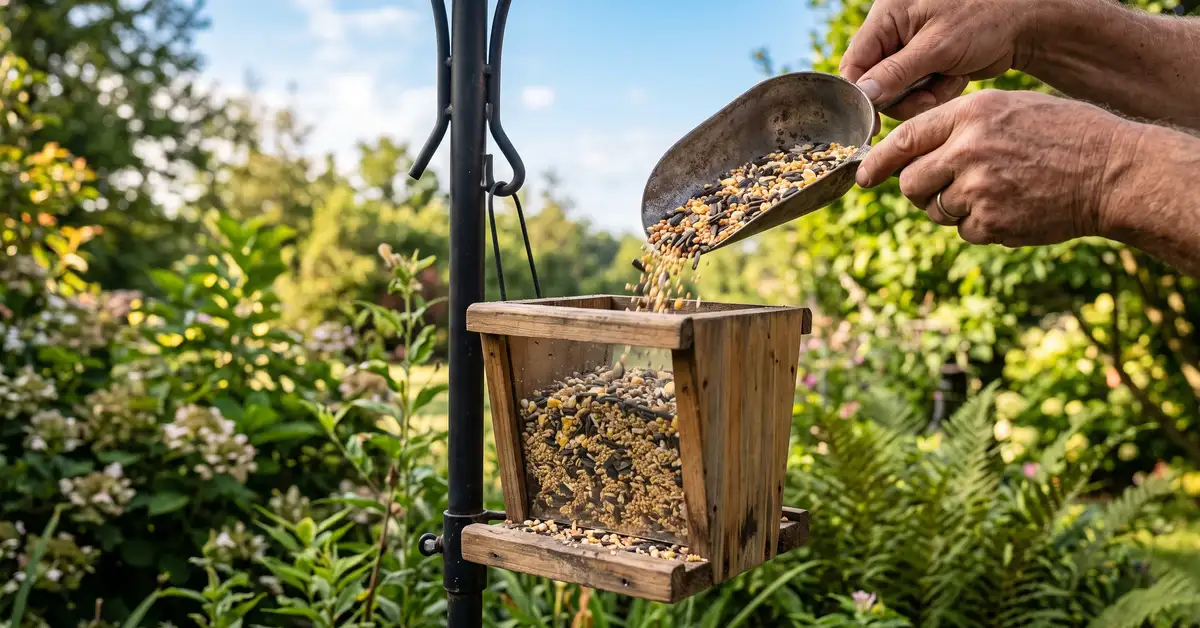
Whichever seed you land on, feeder choice matters too: Cornell Lab notes that cardinals tend to prefer tray and hopper feeders, and in our read of feeder designs a wide, stable perch suits a cardinal’s build better than a narrow-perch tube. Our how to attract cardinals guide covers the full picture — feeder placement, cover, water and why cardinals seem to vanish some months — and our suet guide covers the cold-weather layer that pairs well with any of the seeds above.
Cardinal seed questions, short answers
How we picked: manufacturer ingredient lists and guaranteed-analysis data where published, cross-checked against current Amazon listings, plus Cornell Lab of Ornithology and National Audubon Society guidance on cardinal feeding biology. No testing of any kind is claimed, and we noted plainly wherever a brand didn’t disclose enough detail to compare numerically rather than filling the gap with a guess. Details in How we pick.